


F1 Austin Transportation, Managed End to End
VIPs & Groups
Flight Monitoring
24/7 Client Care


More than 430,000 fans have attended the Formula 1 United States Grand Prix at Circuit of The Americas in recent years, but scale alone is not what makes transportation complicated for an Event Planner (Formula 1, 2025).
The challenge is that every ride is connected to something else.
An airport transfer feeds into a hotel arrival. A hotel departure determines when a guest reaches hospitality at Circuit of The Americas. An executive leaving the circuit early may require a different vehicle plan. A delayed flight can change several pieces of the program before the traveler ever reaches Austin.
A transportation provider can execute each of those reservations successfully and still leave the Event Planner responsible for figuring out how they fit together.
That is the difference between seeing the rides and understanding the event behind them.
After more than one million completed trips across 350+ markets, Savoya has learned that the most valuable transportation partners do more than fulfill reservations. They take responsibility for the movement behind the itinerary so the person running the event does not have to become the transportation operation, too.
A manifest tells a transportation provider who is going where and when. It does not necessarily tell them what those movements mean to the event.
That distinction becomes particularly important during F1 Austin.
Formula 1 returns to Circuit of The Americas October 23–25, 2026, with practice beginning Friday, qualifying Saturday, and the Grand Prix on Sunday (Formula 1, 2026). COTA is also promoting an additional Thursday experience on October 22, extending activity around the circuit beyond the three official race days (Circuit of The Americas, 2026).
The weekend is also much more than racing. COTA's official premium hospitality program combines the race with private hospitality environments, dining, entertainment, concierge services, VIP access, and concerts throughout the weekend (Circuit of The Americas, 2026).
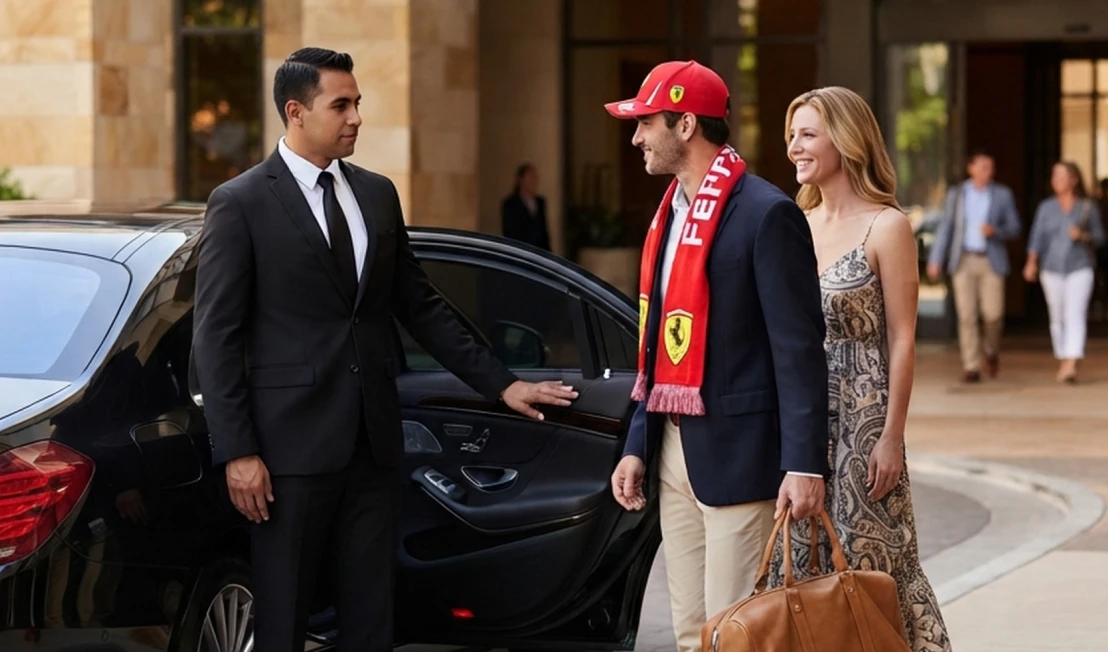
For an Event Planner, that can mean coordinating executives, clients, sponsors, VIPs, and larger guest groups on entirely different schedules. Some passengers may arrive commercially while others arrive through private aviation. An executive may require dedicated transportation while another group moves together. After COTA, guests may separate again for dinners, hospitality, or private events.
Those movements can be entered into a system as separate reservations, but operationally, they are not separate.
If a flight changes, the transportation provider should understand what that change affects next. If an executive's schedule shifts, the question is not simply whether a vehicle can be moved. It is whether that movement affects another part of the program.
The reservation tells you where the passenger is going. The event tells you why that movement matters and what depends on it.
A transportation plan needs both.
Event Planners already have an event to run. Transportation should not create another operation for them to manage.
That becomes particularly important during F1 weekend because the transportation environment extends beyond COTA itself. The City of Austin has designated October 22–26 for Formula 1 transportation activity and has confirmed that neighborhood no-parking restrictions will be enforced, with additional street closure, transportation, and parking information still to come (City of Austin, 2026).
Once guests begin moving, flights arrive, chauffeurs move into position, executives change schedules, groups separate, hospitality runs long, and passenger requirements evolve. The planner should not have to chase each development across calls, texts, individual reservations, and multiple providers.
That work has to live somewhere.
At Savoya, the infrastructure behind the trip is designed to keep it with the transportation operation. Flight monitoring helps identify changes that can affect ground movements. LiveOps provides real-time visibility into active trips. Professional chauffeurs execute the individual movements, while 24/7 Client Care remains available when an itinerary requires attention.
For the Event Planner, those capabilities have one purpose: to reduce how much transportation management comes back to them.
Real-time visibility means the planner does not have to chase an update. Flight monitoring means they should not have to be the first person to notice that an arrival has changed. Around-the-clock support means there is still someone responsible for the transportation when the event extends beyond normal business hours.
The technology, chauffeurs, and service teams are not separate benefits. Together, they create the infrastructure required to take responsibility for the movement.
Consider a corporate program with an executive arriving Friday, clients already at their hotel, and another group arriving that evening. On Saturday, they move to COTA at different times based on their schedules and hospitality commitments. The executive leaves the circuit separately while the client group remains for evening programming before continuing to dinner. Sunday brings another set of movements followed by departures from Austin.
A reservation-based view sees a collection of pickups and drop-offs.
An event-based view understands the dependencies between them.
That broader view changes what happens before and during the event. It means understanding which passengers need dedicated vehicles, which groups move together, where schedules overlap, which movements have less flexibility, and what information the planner needs to maintain visibility across the program.
More importantly, it changes what happens when something moves.
Instead of handing the change back to the Event Planner to solve, the transportation team can evaluate it against the rest of the program and determine what requires attention.
That is where a transportation provider begins functioning as a partner rather than another vendor on the event plan.
The difference is whether your transportation provider sees the rides or understands the event behind them.
Savoya has completed more than one million trips across 350+ markets, supporting executive transportation, groups, private aviation, major events, and itineraries that change while travelers are already moving.
That experience has taught us that complex transportation is not defined by the number of vehicles on the road. It is defined by how much responsibility sits behind every movement.
F1 Austin makes that responsibility particularly visible. Formula 1 reports that the United States Grand Prix has drawn more than 430,000 fans to COTA in recent years, making it one of the sport's largest events (Formula 1, 2025). At the same time, COTA's hospitality and entertainment programming extends the experience beyond what happens on the circuit itself (Circuit of The Americas, 2026).
For Event Planners, the more interconnected the itinerary becomes, the less useful it is to simply know that every ride has been booked. What matters is knowing that someone understands how those rides fit together and has the visibility and support to manage them once the event begins.
Savoya brings professional chauffeurs, multiple vehicle options, flight monitoring, real-time trip visibility, and 24/7 Client Care together around that responsibility.
Because the Event Planner should be managing the experience.
They should not have to manage their transportation provider, too.
Circuit of The Americas. 2026. F1 Premium Hospitality. Accessed September 15, 2026. https://circuitoftheamericas.com/ticket/f1-hospitality/
Circuit of The Americas. 2026. Formula 1 Tickets. Accessed September 15, 2026. https://circuitoftheamericas.com/event/f1/tickets/
City of Austin. 2026. Formula 1 United States Grand Prix Shuttles. Austin Center for Events. Accessed September 15, 2026. https://www.austintexas.gov/ace/events/formula-1-united-states-grand-prix-shuttles
Formula 1. 2025. Formula 1 Announces Extension of the United States Grand Prix Through 2034. October 19, 2025. https://www.formula1.com/en/latest/article/formula-1-announces-extension-of-the-united-states-grand-prix-through-2034.1Qxc1oXyrxaSVLKn2IPvRu.1Qxc1oXyrxaSVLKn2IPvRu
Formula 1. 2026. Formula 1 MSC Cruises United States Grand Prix 2026. Accessed September 15, 2026. https://www.formula1.com/en/racing/2026/united-states
One account means one invoice, one set of standards, and one point of contact. Savoya centralizes billing and reporting by traveler, cost center, and market so your team spends less time reconciling charges and more time managing the program.
Savoya obscures personal contact information through its mobile app, requires signed confidentiality agreements from all chauffeurs, and enforces company-wide privacy policies. Security teams receive advance chauffeur and vehicle details for positive identification.
Events require dedicated coordination, event-specific dashboards, and backup vehicle planning. Savoya assigns a concierge team and monitors every trip in real time so multi-day conference programs don't fall apart after day one.
Savoya tracks flights with ADS-B data and automatically adjusts chauffeur pickup times when the aircraft moves. Changes are reflected in the system and communicated to the chauffeur directly, without requiring a phone call.
Yes. Savoya operates in 350+ markets across six continents on a single account. The same vetting standards, technology, and trip visibility apply whether you book in Dallas, London, or Tokyo.
Ask for specifics: background checks, drug screenings, insurance validation, and confidentiality agreements. Savoya runs a 14-Point Vetting System and accepts fewer than two percent of applicants. Request documentation rather than relying on marketing language.

VIPs & Groups
Flight Monitoring
24/7 Client Care




© 2026 Savoya. All rights reserved.