


Explore Savoya
One standard across every journey.
See how service, technology, and accountability work together.
Why Savoya
Need help planning executive transportation?
See how service, technology, and accountability work together.


By the time Monaco Grand Prix weekend begins, there is little flexibility left in the schedule.
If you are managing travel for the event, transportation is not something that can be adjusted throughout the day, it is something that needs to hold from the first arrival. With road closures already in place, access pints controlled, and timing tied to fixed hospitality and event commitments, even small disruptions are difficult to recover once the day is in motion.
Because the race takes place within the city itself, movement is not happening around a venue, it is happening within it. Hotels, yachts in Port Hercule, and hospitality locations across Monte Carlo are all connected through a network of restricted access points where timing is expected to run precisely.
Even when transportation is arranged in advance, the Monaco Grand Prix introduces pressure that is immediate and difficult to absorb once the schedule is in motion.
These are not isolated variables. Once one element changes, it affects what follows.
With race weekend approaching, transportation is often finalized or adjusted as schedules evolve, guest movements change, and new commitments are added.
At this stage, availability across Monaco and the broader French Riviera becomes increasingly limited, particularly for vehicles positioned to support access within the city during restricted periods. Securing reliable transportation within tight timelines becomes more difficult as demand concentrates within a highly constrained environment.
This is typically when teams need to make adjustments quickly, confirm vehicles on short notice, or rework plans without disrupting what follows.
This is where Savoya becomes the go-to, not just for securing transportation, but for ensuring that last-minute changes, high-visibility arrivals, and evolving schedules are handled with the level of consistency, discretion, and execution expected during the Monaco Grand Prix.
Savoya is built to support this stage of planning, with the flexibility to confirm and adapt transportation within hours, a two-hour cancellation window, and a 24/7 operations team managing changes in real time so adjustments are handled before they impact the rest of the schedule.
By the time Monaco Grand Prix weekend begins, transportation is no longer something that can be adjusted easily throughout the day.
Once access is restricted and arrival windows are in place, there is little opportunity to recover missed timing or reposition plans without impacting the rest of the schedule. What is not secured in advance becomes harder to control as conditions tighten.
Securing transportation in advance is what ensures arrivals happen as expected, access is maintained, and the rest of the day remains aligned once the environment becomes fully restricted.
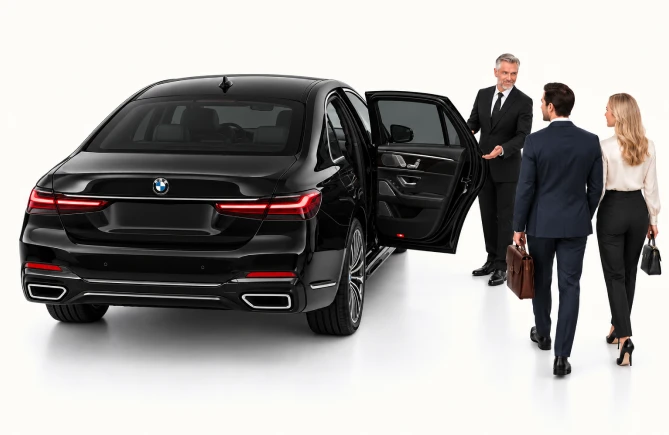
Book your executive car service in Monaco and chauffeur service across the French Riviera with a partner that ensures every arrival, transfer, and engagement remains coordinated and reliable throughout race weekend.
One account means one invoice, one set of standards, and one point of contact. Savoya centralizes billing and reporting by traveler, cost center, and market so your team spends less time reconciling charges and more time managing the program.
Savoya obscures personal contact information through its mobile app, requires signed confidentiality agreements from all chauffeurs, and enforces company-wide privacy policies. Security teams receive advance chauffeur and vehicle details for positive identification.
Events require dedicated coordination, event-specific dashboards, and backup vehicle planning. Savoya assigns a concierge team and monitors every trip in real time so multi-day conference programs don't fall apart after day one.
Savoya tracks flights with ADS-B data and automatically adjusts chauffeur pickup times when the aircraft moves. Changes are reflected in the system and communicated to the chauffeur directly, without requiring a phone call.
Yes. Savoya operates in 300+ markets across six continents on a single account. The same vetting standards, technology, and trip visibility apply whether you book in Dallas, London, or Tokyo.
Ask for specifics: background checks, drug screenings, insurance validation, and confidentiality agreements. Savoya runs a 14-Point Vetting System and accepts fewer than two percent of applicants. Request documentation rather than relying on marketing language.




© 2026 Savoya. All rights reserved.